Finishing a book is an incredible accomplishment. Most people talk about writing a book someday, but very few actually follow through and do it. You put in the hours, wrestled with ideas, edited chapter after chapter, and finally held a printed copy in your hands. That’s something to be proud of.
Then reality sets in.
The book goes live on Amazon. You tell your friends. You make a few social media posts. Maybe you even send an email to your list. Sales trickle in for a week or two, and then… they slow to a crawl.
If that sounds familiar, you’re not alone. In fact, it’s the experience of most authors.
One of the biggest misconceptions is that writing a good book automatically leads to book sales. I wish it worked that way, but it doesn’t. A great book that nobody knows about will almost always lose to an average book written by someone who consistently puts themselves in front of new audiences.
I’ve had the opportunity to work with authors for many years. I’ve designed covers, built author websites, formatted books, created marketing materials, and helped launch more books than I can count. After seeing it happen over and over again, I’ve noticed one thing that separates the authors who continue selling books from those whose sales disappear after launch day.
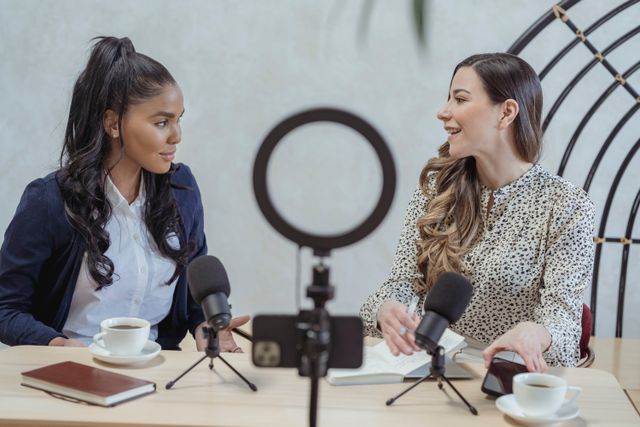
The successful authors stay visible.
They don’t disappear after they hit the Publish button. They keep having conversations. They keep teaching. They keep telling stories. They keep showing people why they wrote the book in the first place.
That’s where podcast interviews can make a tremendous difference.
Think about your own habits. If you’re interested in someone, would you rather read the two-paragraph author bio on the back of a book, or spend forty-five minutes listening to them talk about their experiences, the mistakes they’ve made, and the lessons they’ve learned?
For most of us, the answer is obvious.
A podcast gives people the chance to get to know you. They hear your personality. They hear your passion. They hear the stories that didn’t make it into the book. By the end of the conversation, they aren’t just interested in your book. They’re interested in you.
That matters because people don’t usually buy a book simply because of the title. They buy because they connect with the person behind it.
One mistake I see many authors make is treating every interview like a sales presentation. Every answer somehow circles back to, “Buy my book.”
Ironically, that’s usually the fastest way to lose a listener.
Instead, focus on helping people. Share something you’ve learned. Tell a story that illustrates a lesson. Talk honestly about a challenge you had to overcome. Give people something they can use in their own lives or businesses.
When you do that, curiosity takes over. Instead of feeling like they’ve been sold to, listeners begin asking themselves, “I wonder what else is in that book?”
That’s a much stronger position to be in.
Another advantage of appearing on podcasts is that every interview introduces you to a completely new audience. Even if a show has only a few hundred listeners, those are a few hundred people who likely had never heard of you before. Multiply that by ten, twenty, or fifty interviews over the course of a year, and you’ve introduced yourself to thousands of potential readers without spending a fortune on advertising.
Unlike a social media post that disappears in a matter of hours, podcast episodes often continue getting downloaded for months or even years. Every interview becomes another digital doorway leading people back to you, your message, and ultimately your book.
That’s one of the reasons I launched Frankly Unfiltered.
I wanted to create a place where entrepreneurs, authors, coaches, and business owners could have real conversations instead of rehearsed interviews. No canned questions. No pretending everything has always gone according to plan. Just honest discussions about business, personal growth, the lessons we’ve learned, and sometimes the mistakes that taught us the most.
If you’ve written a book, you’ve already proven that you have a story worth telling. Chances are you’ve learned lessons that someone else needs to hear. Your experiences may encourage another author who’s ready to quit or help a business owner avoid making the same expensive mistake you once made.
You don’t have to be famous. You don’t need a bestselling book. You simply need a willingness to share what you’ve learned in an authentic conversation.
If that sounds like you, I’d love to talk with you.